To be honest, my history with the Goebel Friar Tuck legacy got off to an odd start. I was in Italy, after college with a friend and we decided to tour the Capuchin Crypt.
This appealed to me a bit more than a traditional tour of the catacombs since I don’t do tight spaces. You move through five chapels each decorated with bones and skeletons in artful and intricate designs.
The Capuchins, who branched off Franciscans in the 16th century, designed and implemented the sculptures. We hit up the gift shop on our way out where I purchased the funniest little monk mug to take home with me.
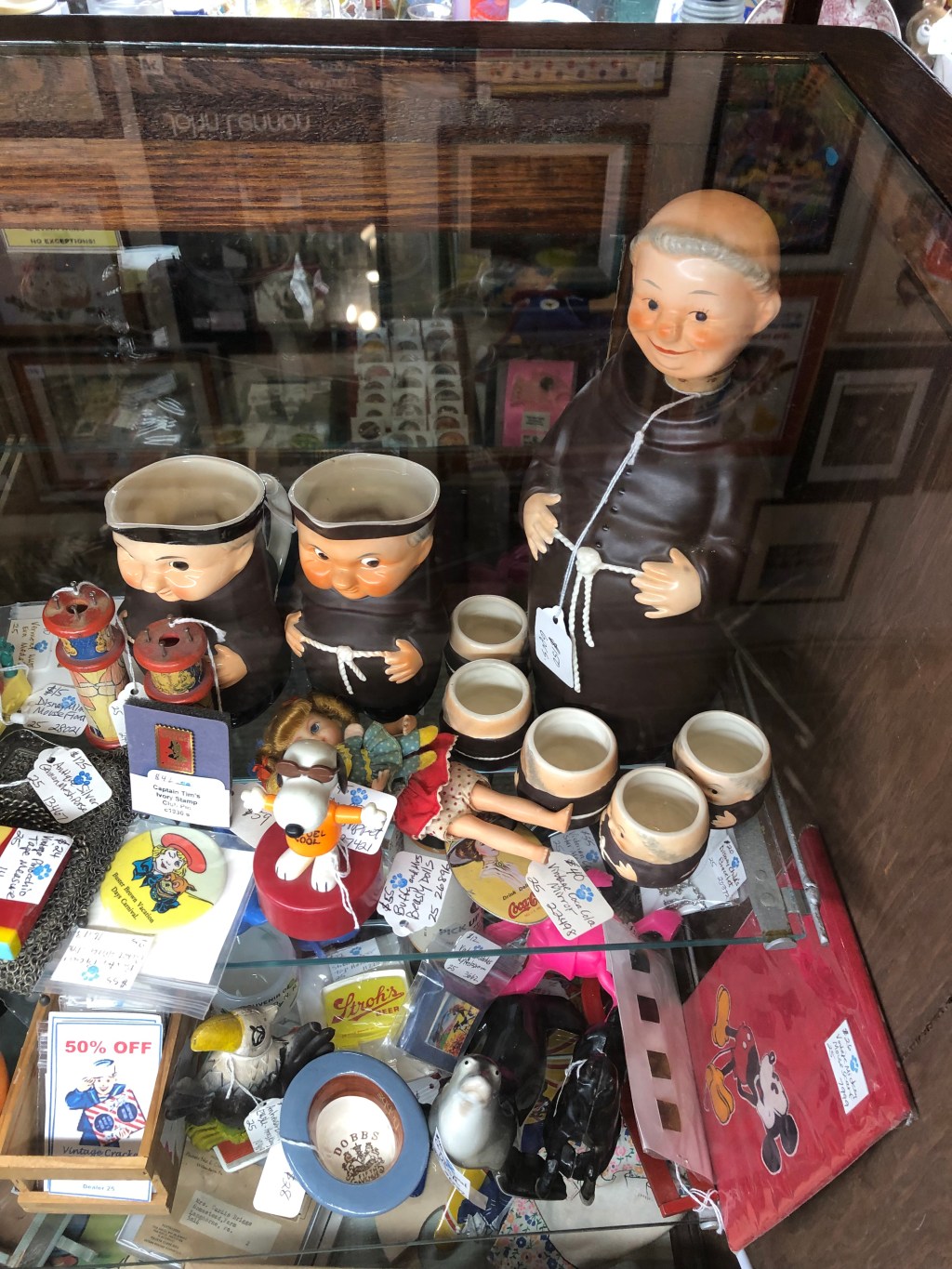
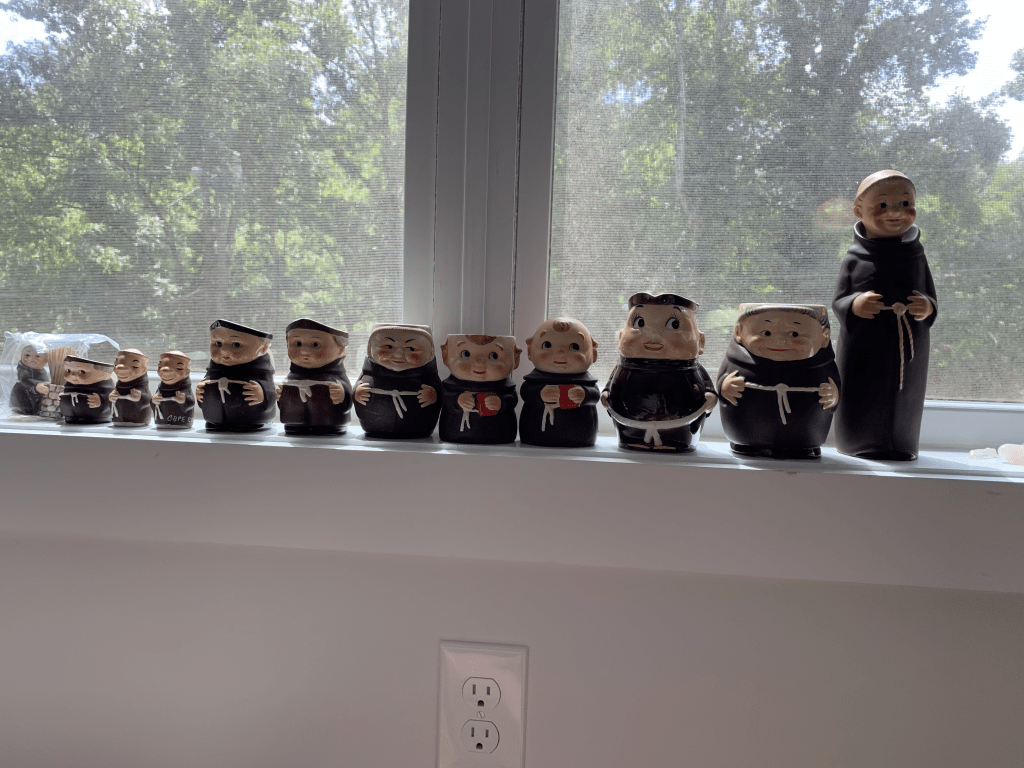
Flash forward to that Christmas when my parents delightfully gifted me my first proper Goebel monk; a tiny milk pitcher they’d found at an antique store. Since then I haven’t been able to help myself.
My collection has grown, sometimes with authentic pieces, sometimes their Japanese counterparts, and sometimes just goofball one-offs that I have to have.
While there isn’t a ton of information out there about the Goebel Friar Tucks, I can say that they were started in the 1950s and were produced up until 1988.
Not to be confused with their Hummel brethren, the little monks were meant to be used, not just placed on a shelf to appreciate in value. As goofy as it is, people put the monks in the category of “with toes” meaning you see their sandaled feet and those without, which are referred to as “with shoes”. Additionally, the oldest of the pitchers have crossed eyes, those friends over at Goebel must have had a sense of humor!
There’s a handful of pieces that are seemingly rarer, including the green Friar Tuck or the thermometers. While all the pieces are nice I don’t really have much thought as to the rarity, for me, it’s all about what I like.
I’d still like to add the double egg timer and the beer mug with the pewter lid to my collection, but of course, the fine in collecting is the hunt!
While there isn’t a ton of information out there on our smiling friends, there are some good entries on both Dr. Lori’s website or on World Collectors.
 Antiquing and Drinking
Leave a comment